

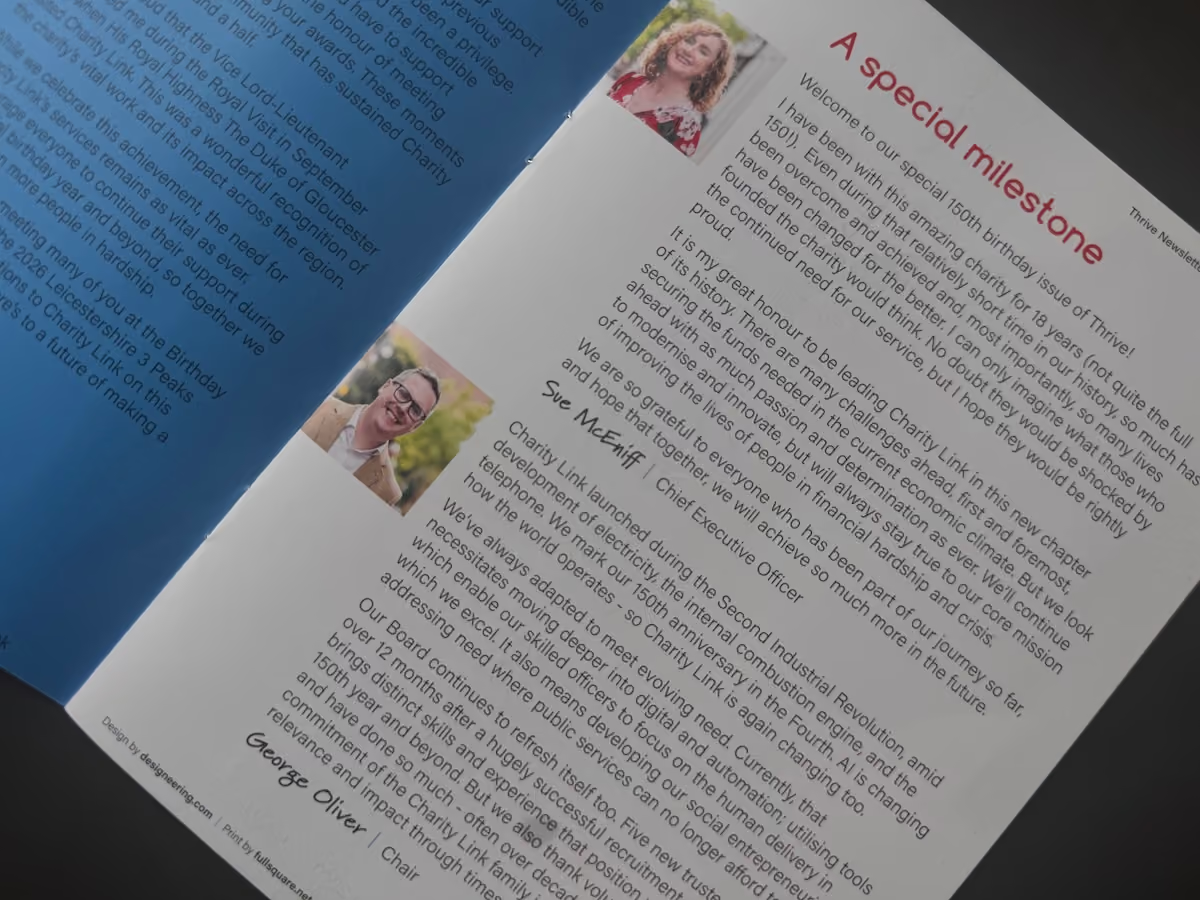
Charity Link chair George Oliver has used the charity’s 150th anniversary brochure to highlight how the organisation is adapting to a new era of need while staying true to its founding mission.
Writing for the special edition of Thrive, George notes that Charity Link was launched during the Second Industrial Revolution “amid development of electricity, the internal combustion engine, and the telephone” and now marks its 150th anniversary in a fourth industrial age being shaped by artificial intelligence.
“AI is changing how the world operates - so Charity Link is again changing too,” his column states.
George writes that the Leicester-based charity has always adapted to meet evolving need, before setting out how it is now moving further into digital and automation so that frontline staff can focus on “the human delivery in which we excel”.
And he adds that developing Charity Link’s social entrepreneurialism is key to addressing need where public services can no longer afford to.
New-look charity board
George also reports that the board has refreshed itself too, with five new trustees appointed over the past 12 months following a successful recruitment campaign.
He says each trustee brings skills and experience that will help position Charity Link to succeed in its 150th year and beyond, paying tribute to departing trustees who have provided decades of service.
George was appointed Chair of Charity Link in June 2024 - taking over from Clive Smith, who has been associated with Charity Link for more than 20 years, including two lengthy spells as Chair.
George first joined the board of trustees in February 2019 while working as Editor of the Leicester Mercury.
Charity Link works to improve wellbeing, dignity, and standards of living by providing essential items, such as school uniforms, beds, white goods, and - in emergencies - help with food and utilities.
It receives referrals from more than 250 charities and community organisations - unlocking small grants to fund help for people who need it, when they need it.
Its innovative way of working – unlocking funds from charitable trusts – makes donations work harder.