LIF26: The theme running through small business innovation week

18
March
2026
•
2
min read
Much of last week was spent at events in and around Leicestershire Innovation Festival - hosting, attending, and meeting people. Sessions covered AI, funding, spin-out journeys, and business growth. But the most useful theme (for me and doubtless many other small business directors) wasn't on any of the agendas.
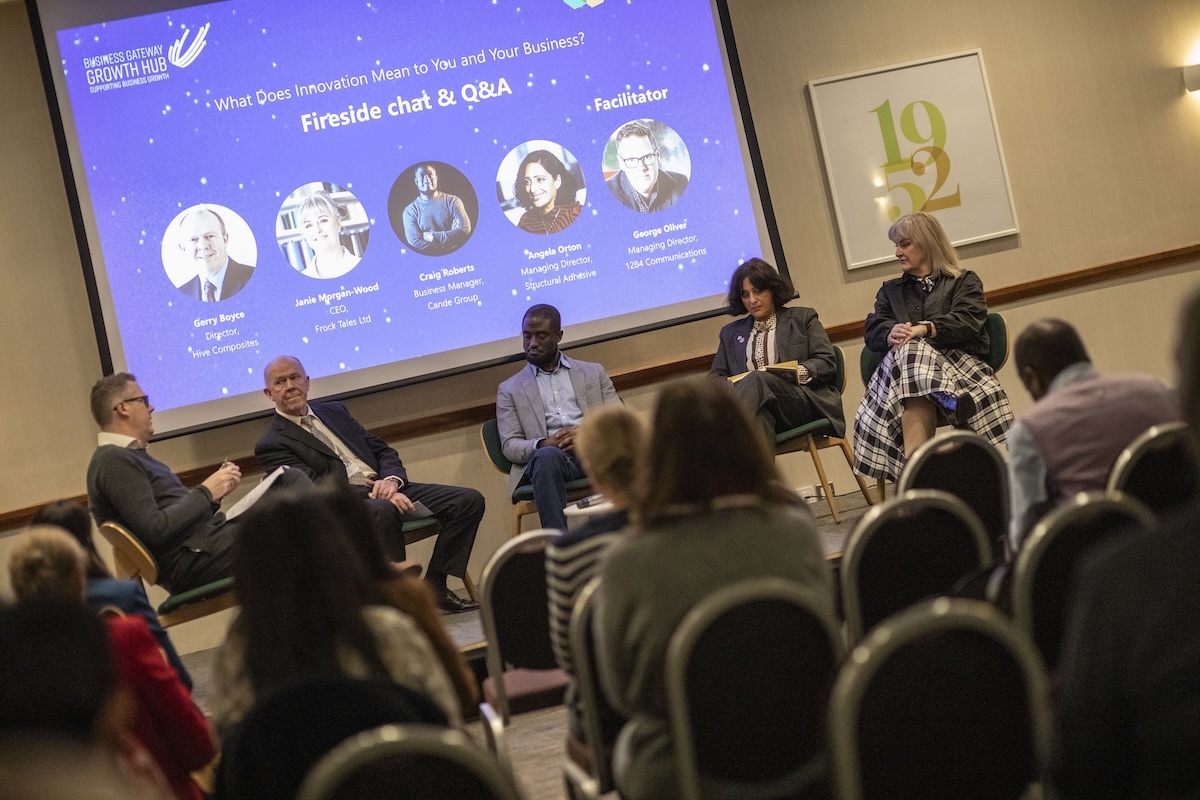
It started during the launch event on SME innovation. Angela Orton - the excellent MD of Leicester-based Structural Adhesives - was talking on a panel I was facilitating about practical routes to small business innovation.
To go or not to go?
Angela described how her company had introduced a traffic light system to evaluate funding opportunities before committing to an application. Rather than pursuing every available pot, the Structural Adhesives team scores each prospective stream against clear criteria - fit, timing, realistic chance of success - before deciding whether to proceed.
This prompted me to pipe up about 1284’s own experience. As Crown Commercial Suppliers, we receive a steady flow of public sector tender opportunities. Evaluating each one properly was taking significant time. But the risk of not doing the diligence was even greater - more time spent on evidencing ITTs which (for one reason or another) 1284 did not have a realistic chance of winning.
Our solution? Similar to Angela, we used AI to build a Go / No Go scoring system - assessing fit, resource, likelihood of success - so we could make faster, better decisions about where to focus our time. The goal was to stop letting the volume of opportunities crowd out the quality of our response to the right ones.
Meanwhile, at Space Park
Later that afternoon, the MoneyMap session at Space Park Leicester, Zhenzhen Wang, CEO of Transhumanity, reflected on the benefit of experience in decision-making. While her first startups looked to join every accelerator programme it could apply for, with the second “every decision is a strategic decision."
For each programme under consideration, the company co-founders ask what they specifically want from it and whether it genuinely offers that. For example, they are currently in Geovation's accelerator because it aligns with target customer groups and the programme is a direct route to that conversation. When the leads arrive it will not be through luck - it will be through discipline.
Adam McGuinness from Plug & Play - the early-stage tech investors - reinforced the point from the investor's perspective. Founders who hop relentlessly from one accelerator to the next raise a flag, he noted. "It can give the impression that they're just doing things. It's about making sure those connections are actually valid and actually fruitful."
It was a sentiment I also heard later in the week. Meeting with a prospective client, I heard they had been approached about entering several business awards and were unsure about the value. My advice was consistent with everything else I had heard across LIF: start with the question of whether winning - or even being shortlisted - actually advances a specific objective. Is the award independent? Is it well-regarded by the people whose opinion matters to you? If the answers are yes, enter properly and invest time in doing so. If not, decline.
What this actually looks like in practice
Speaking at Space Park, Dr Nick Gostick, from Loughborough University's commercialisation team, also advised founders on accelerator programmes: talk to people who have been through it. Ask whether it will move your business closer to real investors and real customers - or just closer to another event.
The same logic applies to networks, memberships, conferences, partnerships, and media opportunities. The question shouldn’t simply be ‘could this be useful?’. It should be ‘does this align with our business strategy - and are we prepared to allocate the resources to do it properly?’.
Being selective over time is not the same as being cautious or risk averse. Saying no to ill-fitting opportunities is what creates space to say yes to the right ones. And to say yes with full commitment, full energy, and the best chance of a result.
That was the theme nobody put on the agenda: how simple small business digital innovation can utilise organisational experience and know how to save time and increase productivity elsewhere.
This article was written by George Oliver. George is the founder of 1284 Communications and co-founder of Leicestershire Innovation Awards. He is a member of the Leicestershire Innovation Advisory Group and the Board of East Midlands Chamber. He is also Entrepreneur-in-Residence at the University of Leicester.
Our monthly newsletter updates you on
• Small business PR tips
• Regional media updates
• Local innovation & funding
By signing up, you agreeing to receive email marketing communications from 1284.
Author

George is Founder and Managing Director of 1284 Communications. He is a CIPR Chartered PR Practitioner, with an MSc in Strategic Leadership from Loughborough University Business School. George was Editor of the Leicester Mercury from 2016-2020. He serves as Chair of Charity Link and is a Non-Executive Director at East Midlands Chamber.