
Could AI be about to double PR budgets set by clients? Amy Orton explores how AEO (or GEO) is less about terminology and more about applying strong communications principles to ensure your organisation is trusted, visible, and surfaced in AI-driven search.
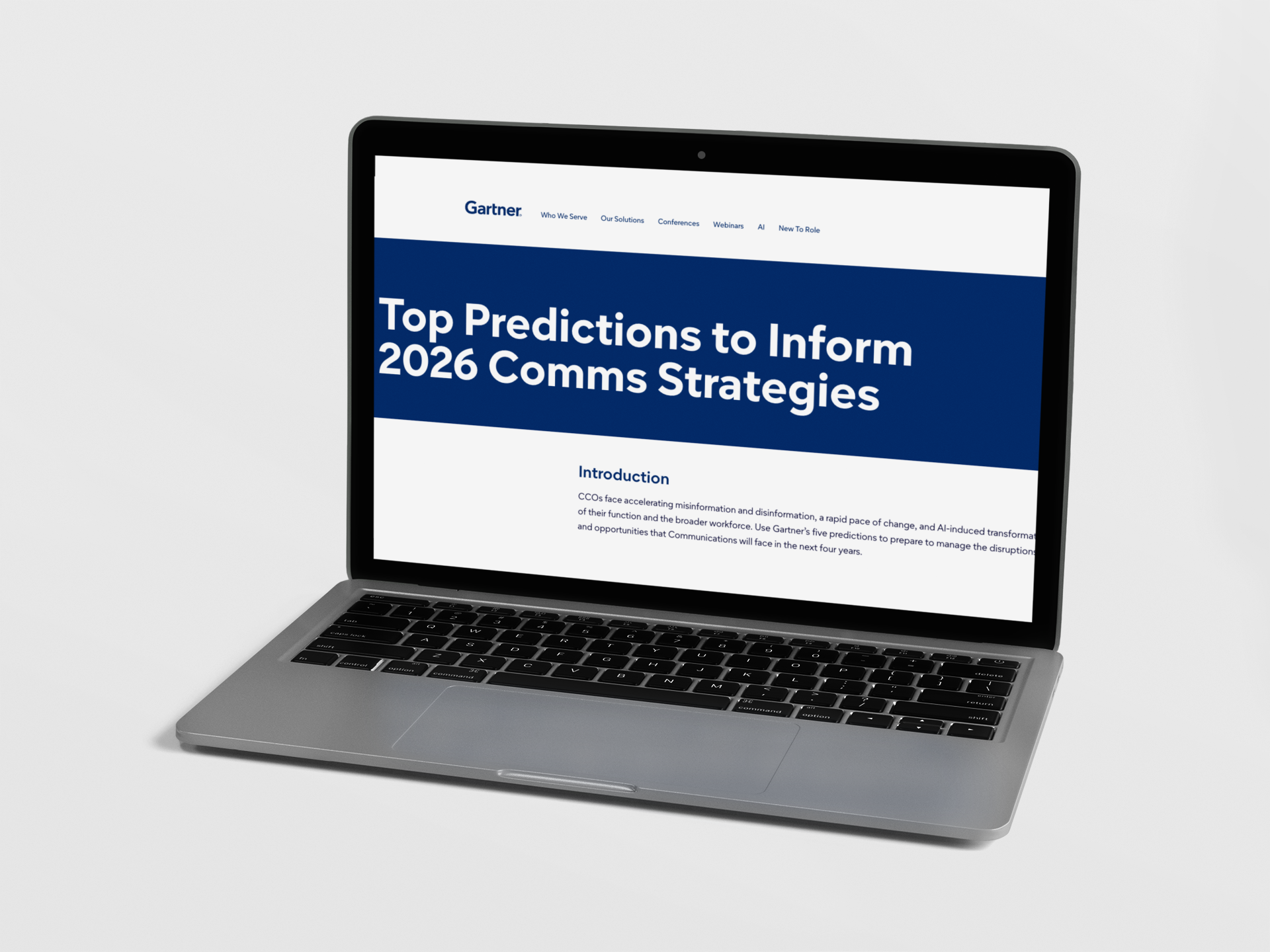
Prediction number 1 in Gartner's Top Predictions to Inform 2026 Comms Strategies report is telling.
It was referenced by Grant Currie has he provided the opening keynote at the CIPR Midlands PR Conference in Birmingham earlier this month.
The brand strategist told delegates that the rise in interest in AI search traffic had "actually led to Gartner predicting that PR budgets will double in the next two to three years . . . because of this."
Grant's point was made in the context of his discussion about GEO (Generative Engine Optimisation) and how AI algorithms prioritise earned media in the results they return.
Specifically, the Gartner report states: "By 2027, mass adoption of public LLMs as a replacement for traditional search will drive a 2x increase in PR and earned media budgets."
Which loosely translates to accelerating AI search volumes meaning a doubling of PR budgets within the next year or so.
This is not driven by a sudden acknowledgement of communications' strategic value (though it remains often overlooked), but by AI fundamentally reshaping how people find information.
Search Is changing
We're already living in the early stages of this shift. Tools like ChatGPT, Copilot, Perplexity and Gemini have become part of daily working and general life.
Asking Google is now the 2000s equivalent of getting a book from the library or looking it up on Encarta.
Asking ChatGPT (and other platforms are available) is now the go to for people looking for answers to all of their questions in all aspects of life.
What many organisations haven't yet registered is what this shift means for how they are found, understood and trusted.
Gartner's data paints a picture. Between the first half of 2024 and the first half of 2025, AI-powered search tools saw extraordinary growth - ChatGPT traffic surged by 608% year-on-year, and Perplexity by 262%. Google and Bing, meanwhile, each declined by approximately 1%.
Traditional search still dominates - but the direction of travel is clear.
Where does AI search?
When an AI engine answers a question about your organisation, it doesn't pull information from your paid ads. It draws on what it considers authoritative, credible third-party sources - your own website and what other trusted websites say about you.
This is where PR and comms come in - how you shape the messages about you on the platforms that AI searches.
Gartner references research showing that more than 95% of links cited in AI search results are non-paid. Meanwhile, 85.5% of AI search citations referencing earned media - genuine editorial coverage in trusted publications.
In old money, that means getting yourself in the paper.
How do you get the attention of an AI search engine?
The simple answer: tell your story, your way. And do it consistently across highly-ranked platforms.
It’s looking for trusted and unique content, not the same old AI-generated stuff that appears all over the internet.
If you've invested in paid media but neglected earned, if your thought leaders aren't regularly appearing in sector press, if your data isn't being published and picked up, you are essentially invisible to a growing potential audience.
Another interesting insight from the report - Gartner highlights urgency around recency.
When AI searches it’s looking for current information, almost half of all citations come from news sources.
Today’s news is no longer tomorrow's chip paper - gaining earned media and building up a catalogue of content in that space is more valuable now than ever.
A proactive earned media strategy isn't just about reputation building anymore, it's about existing in the answers people receive, which means gaining coverage in trusted titles and platforms regularly.